Asphalt Calculator
Estimate hot-mix asphalt tons, gravel base, sealcoating, and paving cost for driveways and parking areas. Overlay, new install, or patch with 2–4 inch thickness options.
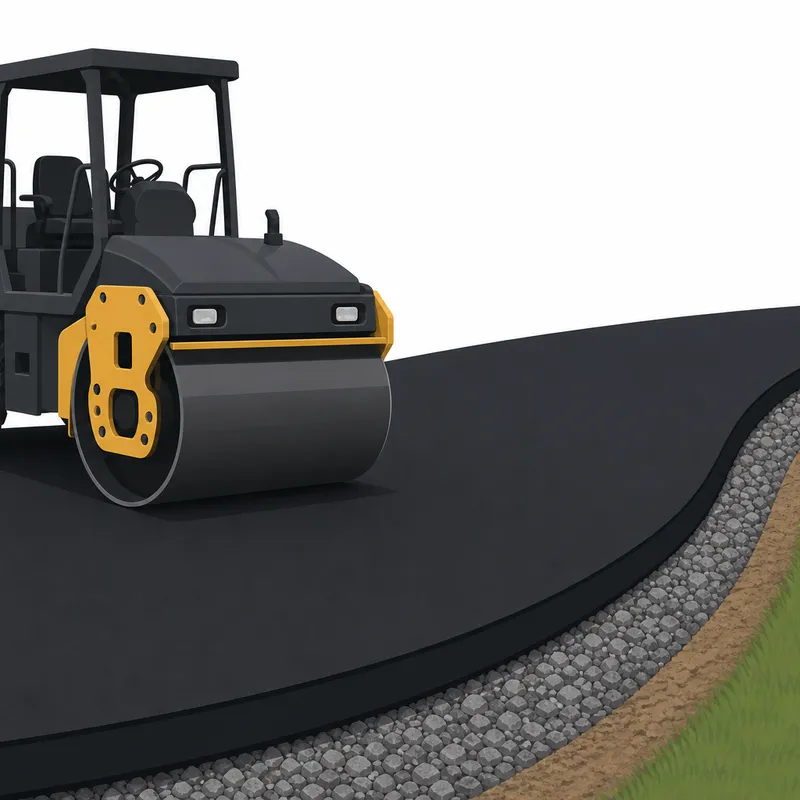
Asphalt is ordered by the ton from a hot-mix plant — and miscalculating thickness or area means an underfilled driveway or an expensive overrun. The EstiCube asphalt calculator converts your dimensions into tons, base gravel, and a realistic budget using 2026 US paving averages.
Enter driveway length and width, choose overlay, new install, or patch, set asphalt thickness, and compare material-only vs fully installed cost before you call a paving contractor.
How much does an asphalt driveway cost in the US?
New asphalt driveways cost $4–$8 per sq ft installed in 2026 — $4,800–$9,600 for a standard 20×40 ft (800 sq ft) two-car driveway including gravel base, compaction, and 3 inches of hot mix. Asphalt material alone runs $100–$150 per ton at the plant.
Overlay (resurface) over a sound existing base costs $2–$4 per sq ft — a 2-inch cap refreshes cracked but structurally sound pavement. Sealcoating adds $0.20–$0.35 per sq ft every 2–3 years to protect against UV and moisture.
A 20×40 ft driveway at 3-inch thickness needs about 14.5 tons of asphalt. Add 4 inches of compacted gravel base for new installs — roughly 40 tons of aggregate for the same area.
How thick should asphalt be?
Residential driveways: 2 inches for light overlay on existing base, 3 inches for standard passenger vehicles, 4 inches if you park RVs or heavy trucks. Commercial lots use 4–6 inches with thicker base courses.
Asphalt weighs about 145 lbs per cubic foot — roughly 2 tons per inch per 80 sq ft. Always compact on a stable, well-drained gravel base. Paving on dirt or thin base leads to cracking within one or two seasons.
Asphalt driveway maintenance
Sealcoat 6–12 months after new paving, then every 2–3 years. Fill cracks with rubberized filler in spring and fall. Avoid sharp turns, jack stands, and motorcycle kickstands on hot summer days — they dent fresh asphalt.
An overlay extends life 10–15 years when the existing base is solid. Full replacement is needed when alligator cracking, base failure, or drainage problems affect the gravel layer beneath.
How to use the asphalt calculator
- Measure driveway or parking area length and width in feet.
- Choose project type: overlay on existing pavement, new driveway, or patch repair.
- Select asphalt thickness — 3 inches is standard for residential driveways.
- Enable gravel base for new installs (4-inch compacted aggregate).
- Enable sealcoating if budgeting protective maintenance on new or resurfaced pavement.
- Enable installation labor for full contractor-installed cost.
- Review tons of asphalt, base gravel, material cost, labor, and total estimate.
Asphalt calculator FAQ
How do I calculate tons of asphalt needed?
Multiply area (sq ft) × thickness (ft) × 145 lbs/cu ft ÷ 2,000 = tons. Example: 800 sq ft × (3/12) ft × 145 ÷ 2,000 = 14.5 tons. Our calculator uses standard hot-mix density of 145 lbs per cubic foot.
How much does asphalt cost per ton?
Hot-mix asphalt costs $100–$150 per ton at the plant in 2026, varying by oil prices and regional demand. Installed paving including labor, base, and equipment runs $4–$8 per sq ft for new driveways. Our calculator uses $125/ton as a planning default.
How thick should a residential driveway be?
Three inches of compacted asphalt is standard for cars and light SUVs on a proper gravel base. Use 2 inches for overlay on sound existing pavement. Use 4 inches if you regularly park boats, RVs, or heavy trucks on the driveway.
Overlay vs new asphalt driveway — which do I need?
Overlay (2-inch cap) works when the base is stable and cracks are surface-level. Choose full replacement when you see alligator cracking, potholes exposing base, or soft spots when driving. A paving contractor can core-test to confirm base condition.
Do I need a gravel base under asphalt?
Yes for new driveways — 4–6 inches of compacted crushed stone provides drainage and structural support. Overlays on existing driveways typically skip new base unless the old base has failed. Our calculator adds 4 inches of base for new install projects.
How much does it cost to resurface an asphalt driveway?
Asphalt overlay costs $2–$4 per sq ft installed in 2026. An 800 sq ft driveway runs $1,600–$3,200 for a 2-inch resurfacing. Sealcoating afterward adds $160–$280. Our calculator separates overlay material, labor, and optional sealcoat.
How long does an asphalt driveway last?
A properly built asphalt driveway lasts 15–25 years with sealcoating every 2–3 years and prompt crack repair. Overlays add 10–15 years when the base remains sound. Climate, drainage, and traffic load significantly affect lifespan.
When is the best time to pave a driveway?
Late spring through early fall when ambient temperatures stay above 50°F and the hot-mix plant is operating. Asphalt needs warm weather to compact properly. Book contractors early — paving season fills up fast in northern states.
Sources
- Asphalt Pavement Design and Construction — Federal Highway Administration
- Engineering FAQs — Asphalt Maintenance and Rehabilitation — Asphalt Institute
- Pavement Preservation — Federal Highway Administration
- Asphalt Paving Handbook — National Asphalt Pavement Association
Related calculators
Projects often planned together — jump to a related estimator for the next line item.
Sealcoating
Calculate sealcoat gallons and cost for parking lots and commercial pavement. Includes mobilization, crack prep, traffic control, and two-coat application.
Pothole
Estimate pothole patch count, cold mix bags, saw-cut prep, and repair cost for parking lots and commercial pavement. Includes mobilization minimums.
Crack Seal
Estimate linear feet of crack sealant, hot-pour blocks, and routing cost for parking lot pavement maintenance. Includes mobilization and minimum trip charges.
Concrete
Calculate cubic yards of concrete for slabs, driveways, and sidewalks. Includes bags, rebar, delivery, and pour cost estimates.
Gravel
Calculate cubic yards and tons of gravel for driveways, paths, and base fill. Free gravel calculator with delivery and spreading cost estimates.
Striping
Estimate pavement marking linear feet, traffic paint gallons, and striping cost. Includes stalls, ADA symbols, fire lanes, arrows, and mobilization.
More outdoor projects calculators
Decks, pavers, asphalt driveways, fences & hardscape
Explore all 4 categories
Browse every free EstiCube tool by project type — home builds, outdoor hardscape, landscape, and commercial pavement.
View full calculator directory