Insulation Calculator
Estimate blown insulation bags, fiberglass batts, depth, and cost for attic, wall, and floor zones. Target R-13 through R-60 with optional professional installation.
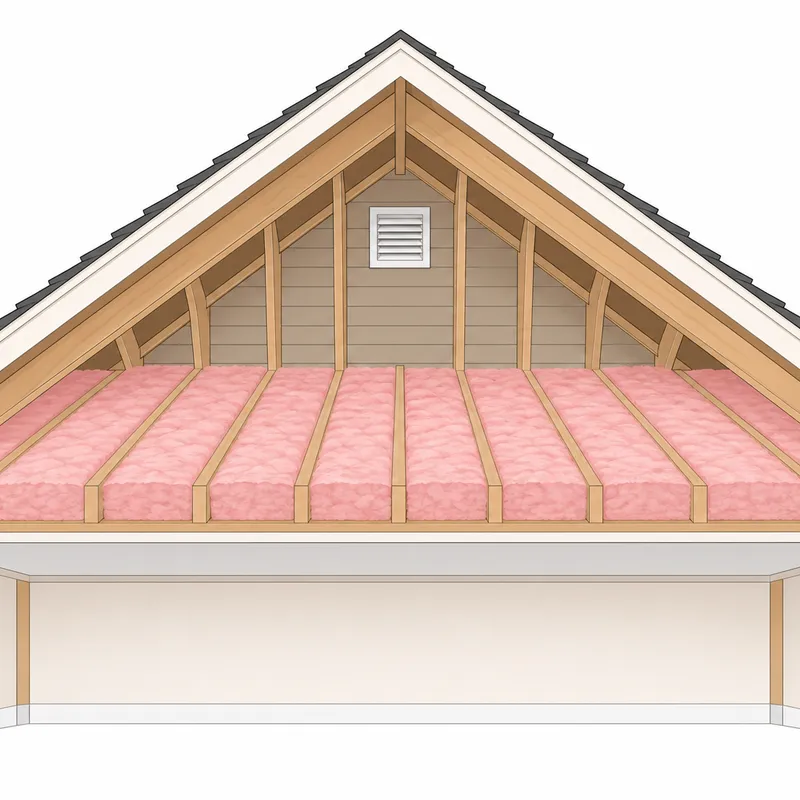
Under-insulated attics waste hundreds of dollars a year in heating and cooling — but guessing bag counts leads to extra rental equipment trips or thin spots that underperform. The EstiCube insulation calculator converts your area and target R-value into material quantities and a realistic budget using 2026 US averages.
Enter square footage, choose attic, wall, or floor zone, select blown fiberglass, cellulose, or batt insulation, set your target R-value, and get your order list before you rent a blower or buy batts.
How much does insulation cost in the US?
Blown attic insulation costs $1.20–$2.00 per sq ft installed in 2026 depending on R-value and material. R-38 attic insulation (12 inches of blown fiberglass) on a 1,000 sq ft attic runs $1,200–$2,000 professionally installed. DIY blown cellulose material alone costs $0.60–$1.00/sq ft.
Fiberglass batts for walls cost $0.50–$1.20 per sq ft for R-13 to R-21. Blown cellulose is slightly cheaper per R-value than blown fiberglass and fills irregular joist bays better. Cold-climate attics target R-49 to R-60 per DOE recommendations.
Professional installation includes even coverage, proper ventilation baffles at eaves, and damming around recessed lights. Rebates from utilities and federal tax credits can offset 10–30% of attic insulation projects — check energystar.gov for current programs.
Recommended R-values by zone
US Department of Energy recommends R-38 to R-60 for attics in most climates, R-13 to R-21 for wall cavities, and R-19 to R-30 for floors over crawlspaces. R-38 equals about 12 inches of blown fiberglass; R-49 needs 15 inches; R-60 needs 18 inches.
Measure existing insulation depth before adding more — do not compress batts, which reduces R-value. Install rafter vents at soffits before blowing attic insulation to keep soffit intake airflow open.
Blown vs batt insulation
Blown fiberglass and cellulose suit open attic floors and retrofit wall cavities through access holes. Cellulose has slightly higher R-value per inch (about R-3.7 vs R-2.5 for fiberglass) and settles less over time when installed at proper density.
Fiberglass batts work best in open wall studs and floor joists during new construction or full remodels when cavities are exposed. Batts must be cut to fit snugly without gaps — compressed or loosely fitted batts lose significant R-value.
How to use the insulation calculator
- Measure insulation area in square feet — attic floor area for attics, wall area for walls.
- Select zone: attic, wall cavity, or floor/crawlspace.
- Choose insulation type: blown fiberglass, blown cellulose, or fiberglass batts.
- Set target R-value — R-38 is the attic standard in most US climates.
- Enable installation labor to compare DIY material cost vs professional blowing.
- Review depth in inches, bag or batt count, material cost, and total estimate.
Insulation calculator FAQ
How do I calculate how much attic insulation I need?
Measure attic floor length × width for square footage. Choose target R-value — R-38 needs about 12 inches of blown fiberglass. Divide area by coverage per bag (roughly 28 sq ft per bag at R-38 for blown fiberglass). Our calculator handles depth, bags, and cost automatically.
What R-value should my attic have?
Most US homes should have R-38 to R-49 in the attic per DOE climate zone guidelines. Northern states (zones 5–7) benefit from R-49 to R-60. Southern attics (zones 1–3) often target R-30 to R-38. Check your zone at energy.gov.
How many inches is R-38 insulation?
R-38 blown fiberglass is approximately 12 inches deep. R-30 is 9 inches, R-49 is 15 inches, and R-60 is 18 inches. Depth varies slightly by product — always verify the label on your specific insulation bags.
Blown cellulose vs blown fiberglass — which is better?
Cellulose has higher R-value per inch, better air sealing at proper density, and uses recycled content. Fiberglass is lighter, non-settling when installed correctly, and does not absorb moisture as readily. Both perform well in attics when installed to manufacturer depth.
Can I install blown insulation myself?
Yes — home improvement stores rent insulation blowers for $50–$100 per day. Two people are ideal: one feeds the hopper, one works the hose in the attic. Wear N95 respirator, goggles, long sleeves, and watch for recessed lights — use IC-rated covers or dams.
How much does blown attic insulation cost?
Professional blown attic insulation costs $1.20–$2.00 per sq ft for R-38 to R-49 in 2026. A 1,000 sq ft attic runs $1,200–$2,000 installed. DIY material cost is roughly half. Our calculator uses $1.20–$1.40/sq ft material at R-38 depending on type.
Should I remove old insulation first?
Usually no — add new blown insulation on top of existing fiberglass if it is dry and not moldy. Remove wet, moldy, or pest-contaminated insulation first. Do not install new material over vermiculite insulation from pre-1990 homes without asbestos testing.
Do fiberglass batts work in attics?
Unfaced fiberglass batts can be laid between attic joists or cross-layered for higher R-value, but blown insulation fills gaps around joists and obstructions better. Batts are best for walls and floors where cavities are open during construction.
Sources
- Recommended Home Insulation R-Values — ENERGY STAR (U.S. DOE / EPA)
- A DIY Guide to Sealing and Insulating with ENERGY STAR — ENERGY STAR (U.S. DOE / EPA)
- Seal and Insulate with ENERGY STAR — ENERGY STAR (U.S. DOE / EPA)
- About NAIMA — North American Insulation Manufacturers Association (NAIMA)
- Protect Your Family from Asbestos-Contaminated Vermiculite Insulation — U.S. Environmental Protection Agency (EPA)
Related calculators
Projects often planned together — jump to a related estimator for the next line item.
Siding
Estimate vinyl, fiber cement, wood, and aluminum siding cost per square foot. Includes trim, waste allowance, and installation labor.
House
Full home construction estimator — foundation, basement, framing, roof, MEP & finishes. Cost ranges for every building phase.
Roofing
Calculate roofing squares, shingle bundles, underlayment, and installed roof cost. Includes pitch, tear-off, ice shield, and flashing.
Drywall
Calculate drywall sheets, joint compound, tape, and screws for any room. Includes ceiling, door/window deductions, and finishing labor cost.
More home & structure calculators
Whole-home builds, drywall, siding, insulation & finishes
Explore all 4 categories
Browse every free EstiCube tool by project type — home builds, outdoor hardscape, landscape, and commercial pavement.
View full calculator directory