Parking Lot Sealcoating Calculator
Calculate sealcoat gallons, square footage coverage, and installed cost for parking lots, drive lanes, and commercial asphalt surfaces. Includes mobilization, cleaning, crack fill, oil spot primer, and two-coat application.
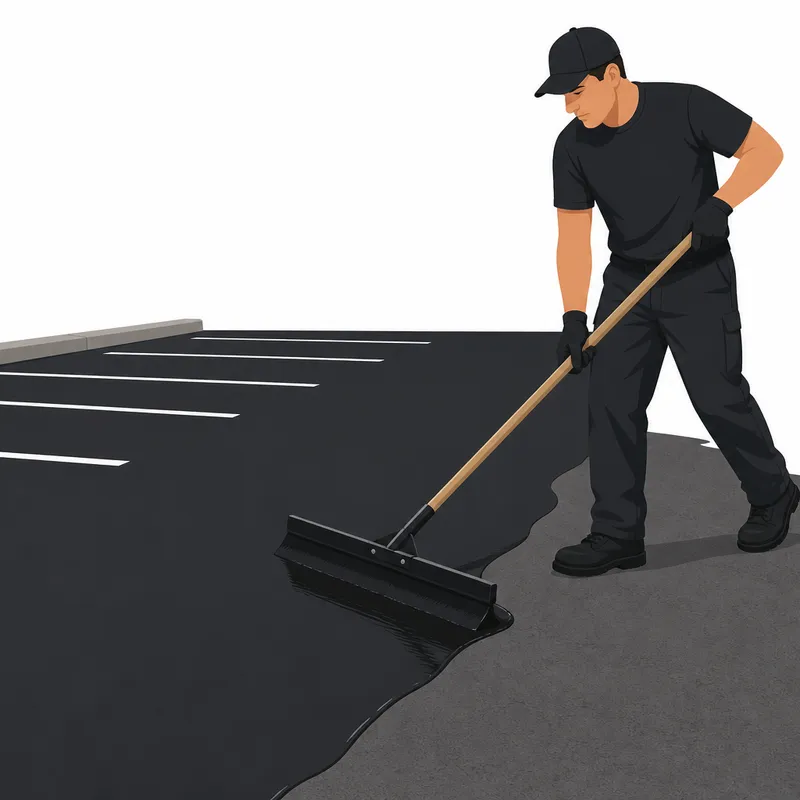
Sealcoating protects asphalt from UV oxidation, water intrusion, and petroleum spills — but bids vary widely depending on prep scope, coat count, and lot size. The EstiCube sealcoating calculator breaks down what professional pavement maintenance contractors include: surface cleaning, crack routing and fill, oil spot treatment, material gallons, and two-coat application with barricade time.
Enter your lot area in square feet, choose asphalt emulsion or coal tar sealcoat, and add optional prep line items. Results show gallons per coat, total material, mobilization, labor, and a realistic installed cost based on 2026 US commercial averages.
Parking lot sealcoating cost per square foot
Sealcoating is priced per square foot per coat, and two coats is standard for commercial lots. These are the 2026 US rates behind the calculator.
| Sealer product | Material | Labor | Per sq ft, per coat | Coverage |
|---|---|---|---|---|
| Asphalt emulsion | $0.07 | $0.06 | $0.13 | 75 sq ft / gal |
| Fast-dry polymer | $0.08 | $0.065 | $0.145 | 80 sq ft / gal |
| Coal tar sealer | $0.09 | $0.07 | $0.16 | 70 sq ft / gal |
Add $0.05/sq ft for crack prep, $350 mobilization, and $150 traffic control; the minimum job is $450. Two coats is the commercial standard, so a 20,000 sq ft emulsion job runs about $5,200 before prep and mobilization — roughly $0.26/sq ft installed. Worn pavement absorbs 10-25% more sealer.
How much does parking lot sealcoating cost?
Commercial parking lot sealcoating in the United States typically costs $0.18–$0.42 per square foot for two coats applied by a professional contractor, with most 10,000–50,000 sq ft lots landing at $0.22–$0.32/sq ft. Small lots under 5,000 sq ft often hit minimum trip charges of $450–$900 for mobilization, spray equipment, and barricade setup.
Material-only pricing runs $0.08–$0.15/sq ft for asphalt emulsion sealcoat and $0.10–$0.18/sq ft for coal tar emulsion. One gallon covers roughly 80–100 sq ft per coat at standard dilution (25–30% water). A 20,000 sq ft lot needs about 400–500 gallons per coat — 800–1,000 gallons total for two coats.
Add-ons drive the per-foot price up: crack sealing ($0.85–$2.25/LF), oil spot primer ($8–$15 per spot), power washing ($0.03–$0.06/sq ft), and line restriping after sealcoat cure ($0.25–$0.45/LF). Budget sealcoating every 2–3 years on commercial lots and every 2–4 years on residential driveways.
What is included in a professional sealcoating bid
Professional sealcoating quotes almost always bundle mobilization (tanker truck or trailer sprayer, squeegee crew for edges), surface preparation (blow, sweep, or power wash), and traffic control (cones, caution tape, barricades during 24–48 hour cure). Two coats are industry standard — the first coat seals pores, the second builds wear surface.
Crack fill and oil spot treatment are separate prep items but frequently bundled on maintained lots. Rubberized hot-pour crack filler is applied before sealcoat; oil spots get a primer coat to prevent bleed-through. Alligator-cracked areas may need patching or overlay instead of sealcoat alone.
Our calculator uses 90 sq ft per gallon per coat as a planning average for properly diluted asphalt emulsion, with a 10% waste allowance for edges, curbs, and overspray. Coal tar covers slightly less per gallon but offers stronger fuel resistance on gas station aprons and drive-through lanes.
When to sealcoat and material selection
Apply sealcoat when pavement temperature is 50°F and rising, with no rain forecast for 24 hours. Ideal months are late spring through early fall in most US climates. New asphalt should cure 6–12 months before the first sealcoat — sealing too early traps oils and causes adhesion failure.
Asphalt emulsion sealcoat is the most common choice for general parking lots — lower odor, easier cleanup, and environmentally preferred in many municipalities. Coal tar emulsion resists gasoline and oil better, making it standard for convenience stores, quick-lube bays, and loading docks.
Schedule sealcoating before restriping — fresh sealcoat needs 48 hours cure before traffic paint adheres. Coordinate with your striping contractor so stall lines, fire lanes, and ADA markings go down on cured, clean pavement.
How to use the sealcoating calculator
- Measure your parking lot or driveway area in square feet — exclude landscaped islands and building footprint.
- Select sealcoat type: asphalt emulsion for general lots, coal tar for fuel-exposed areas.
- Set coat count (two coats is standard for commercial durability).
- Add linear feet of crack sealing and count of oil spots needing primer treatment.
- Enable power washing if the surface has heavy dirt, moss, or failed previous sealcoat.
- Review gallons per coat, total material, mobilization, prep, labor, and installed cost per square foot.
Sealcoating calculator FAQ
How many gallons of sealcoat per square foot?
One gallon of properly diluted sealcoat covers about 80–100 square feet per coat. Two coats on 10,000 sq ft need roughly 200–250 gallons total. Coverage drops on porous, oxidized asphalt (first seal on old pavement) and increases on recently paved, tight surfaces. Our calculator uses 90 sq ft/gallon per coat with a 10% waste allowance.
How much does sealcoating cost per square foot?
Professional two-coat sealcoating costs $0.18–$0.42/sq ft installed in 2026, with commercial lots over 10,000 sq ft at the lower end. Small residential driveways pay $0.35–$0.55/sq ft due to minimum mobilization charges. Material-only DIY application runs $0.08–$0.15/sq ft but requires spray equipment, prep, and proper cure management.
Asphalt emulsion vs coal tar sealcoat — which is better?
Asphalt emulsion is standard for most parking lots — lower odor, easier cleanup, and widely accepted by property managers. Coal tar resists gasoline, oil, and jet fuel better, making it preferred for gas stations, restaurants with grease traps, and loading docks. Some states restrict coal tar due to PAH content — check local regulations before specifying.
How often should I sealcoat a commercial parking lot?
Sealcoat commercial parking lots every 2–3 years in high-traffic retail and multifamily settings. Office parks with moderate traffic can stretch to 3–4 years. Signs you need sealcoating: gray, faded asphalt color, loose aggregate on the surface, and water no longer beading. Alligator cracking and base failure need patching or overlay, not sealcoat alone.
What prep work is required before sealcoating?
Professional prep includes blowing or sweeping debris, power washing if needed, filling cracks with hot rubberized filler, priming oil spots, and barricading the area. Vegetation along edges should be trimmed. All standing water must drain before application. Skipping prep causes peeling, streaking, and premature failure — the cheapest bid often omits adequate cleaning.
How long does sealcoating take to dry?
Sealcoat is dry to touch in 4–8 hours and ready for foot traffic in 12–24 hours. Vehicle traffic should wait 24–48 hours depending on humidity and temperature. Restriping goes on after full cure — typically 48–72 hours. Schedule weekend or overnight work for retail lots to minimize business disruption.
Can I sealcoat over cracks and potholes?
Hairline and moderate cracks should be filled with rubberized crack sealant before sealcoating — sealcoat alone will not bridge moving cracks. Potholes and alligator-cracked areas need hot mix patch or infrared repair first. Sealcoating is a protective topcoat, not a structural repair. Budget crack sealing and patching separately from the sealcoat application.
Does sealcoating include restriping?
Sealcoating and line striping are separate trades. Fresh sealcoat covers existing paint — you must restripe stall lines, fire lanes, ADA symbols, and directional arrows after cure. Most property managers schedule sealcoating first, then striping 2–3 days later. Our calculator focuses on sealcoat scope; use the line striping calculator for pavement marking costs.
Sources
- Coal-Tar-Based Pavement Sealcoat, PAHs, and Environmental Health — U.S. Geological Survey
- Polycyclic Aromatic Hydrocarbons, Coal-Tar Sealcoat, and Environmental Health — U.S. Environmental Protection Agency
- Engineering FAQs — Asphalt Maintenance and Rehabilitation — Asphalt Institute
- Pavement Preservation — Federal Highway Administration
Related calculators
Projects often planned together — jump to a related estimator for the next line item.
Striping
Estimate pavement marking linear feet, traffic paint gallons, and striping cost. Includes stalls, ADA symbols, fire lanes, arrows, and mobilization.
Crack Seal
Estimate linear feet of crack sealant, hot-pour blocks, and routing cost for parking lot pavement maintenance. Includes mobilization and minimum trip charges.
Pressure washing
Estimate power washing cost per square foot for concrete, asphalt, storefronts, and dumpster pads. Includes gum removal and water reclaim.
Pothole
Estimate pothole patch count, cold mix bags, saw-cut prep, and repair cost for parking lots and commercial pavement. Includes mobilization minimums.
Asphalt
Calculate tons of hot-mix asphalt for driveways and overlays. Includes gravel base, sealcoating, and paving cost estimates.
More commercial calculators
Striping, sealcoating, potholes, signs, sweeping & curbing
Explore all 4 categories
Browse every free EstiCube tool by project type — home builds, outdoor hardscape, landscape, and commercial pavement.
View full calculator directory