Tile Flooring Calculator
Estimate tile count, boxes, thinset bags, grout, and installation cost for any rectangular floor. Ceramic, porcelain, natural stone, and subway tile with pattern waste allowance.
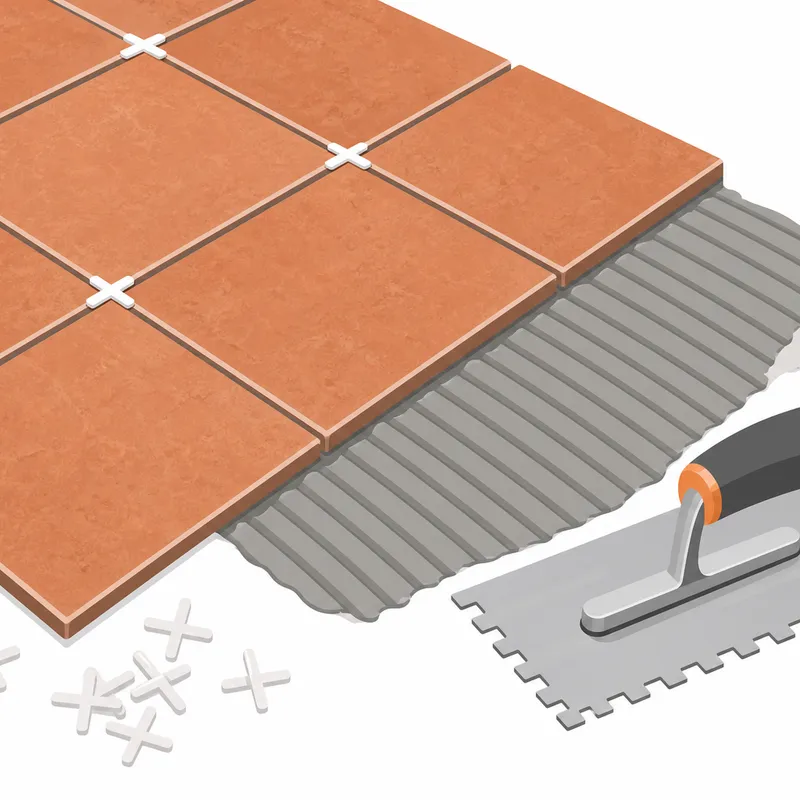
Running short on tile mid-installation means mismatched dye lots and project delays; over-ordering wastes money on boxes you cannot return. The EstiCube tile calculator converts your room dimensions into tile count, mortar, grout, and a realistic budget using 2026 US material and labor averages.
Enter room length and width, choose tile size and material, and get your full material list before you visit the flooring showroom.
How much does tile flooring cost in the US?
Installed tile flooring in the United States costs $8–$25 per square foot depending on material and complexity. Ceramic tile material runs $1.50–$4/sq ft; porcelain $3–$8/sq ft; natural stone $6–$15/sq ft. A 10×12 ft bathroom (120 sq ft) costs $960–$3,000 installed.
Labor is typically $5–$12 per square foot for floor tile — more for intricate patterns, small mosaics, or diagonal layouts. Thinset mortar costs $15–$25 per 50 lb bag (covers ~50 sq ft). Grout adds $0.50–$1.50 per sq ft in material.
Order 10–15% extra tile for cuts, breakage, and future repairs. Store leftover boxes in a dry place — dye lots change and matching later is difficult.
How much extra tile should I order?
Straight lay on a square room: 10% waste. Diagonal or herringbone patterns: 15–20%. Large format tiles (12×24 and up) have fewer cuts but higher breakage risk during handling. Mosaic sheets waste less on cuts but cost more per square foot.
Always round up to full boxes. Most tile is sold in boxes of 5–15 sq ft depending on tile size. Keep one extra box after installation for future chip repairs.
How to use the tile calculator
- Measure room length and width in feet for total floor area.
- Select tile size — 12×12 and 12×24 are the most common floor formats.
- Choose material type: ceramic for budget baths, porcelain for durability, stone for premium.
- Set waste allowance — 10% for straight lay, 15% for diagonal patterns.
- Enable thinset and grout for a complete material list.
- Review tile count, boxes, material cost, and total with optional labor.
Tile calculator FAQ
How do I calculate how many tiles I need?
Multiply room length × width for area in sq ft, add 10% waste, then divide by tile size in sq ft. Example: 12×10 ft room = 120 sq ft + 10% = 132 sq ft. Using 12×12 tiles (1 sq ft each) = 132 tiles. Our calculator handles this and rounds to full boxes.
How much tile waste should I add?
Add 10% for standard straight layouts on a rectangular room. Use 15% for diagonal layouts, hallways with many cuts, or small mosaic tiles. Large 18×18 or plank tiles may need only 8–10% on simple rooms.
How much does tile installation cost per square foot?
Professional floor tile installation averages $5–$12 per square foot in 2026, depending on region, tile size, and subfloor prep. Natural stone and intricate patterns cost more. Simple 12×12 ceramic in a square room is at the low end.
Porcelain vs ceramic tile — which should I use?
Porcelain is denser, less porous, and better for high-moisture floors and outdoor use. Ceramic is more affordable and fine for low-traffic bathroom walls and floors. For shower floors and busy entryways, choose porcelain.
How many square feet does a bag of thinset cover?
A 50 lb bag of thinset mortar covers approximately 40–60 sq ft at 1/4-inch trowel notch depth depending on tile size and trowel type. Large format tiles need a deeper notch and use more mortar per square foot.
How much grout do I need per square foot?
Plan about 0.5 lbs of grout per square foot for standard floor tile with 1/8-inch joints. Wider joints and smaller tiles use more grout. Always buy slightly extra — opened grout cannot be returned.
Can I tile over existing tile?
Yes if the existing tile is well-bonded, level, and you use a quality thinset rated for overlay. Height increases at doorways and fixtures may need adjustment. Cracked or loose existing tile must be removed first.
What size tile is best for small bathrooms?
12×24 plank tiles make small rooms feel larger with fewer grout lines. 12×12 is classic and easy to install. Mosaics work well on shower floors for slip resistance. Avoid very large format tiles in tiny rooms — cuts waste more material.
Sources
- ANSI Standards (A108/A118/A136.1) — Tile Council of North America (TCNA)
- 2025 TCNA Handbook for Ceramic, Glass, and Stone Tile Installation — Tile Council of North America (TCNA)
- Porcelain in the Ceramic Tile Industry — Tile Council of North America (TCNA)
- Occupational Exposure to Respirable Crystalline Silica — Construction — Occupational Safety and Health Administration (OSHA)
Related calculators
Projects often planned together — jump to a related estimator for the next line item.
Paint
Calculate how much paint you need for walls and ceilings. Gallons, primer, and painting cost for interior and exterior rooms.
Drywall
Calculate drywall sheets, joint compound, tape, and screws for any room. Includes ceiling, door/window deductions, and finishing labor cost.
House
Full home construction estimator — foundation, basement, framing, roof, MEP & finishes. Cost ranges for every building phase.
Concrete
Calculate cubic yards of concrete for slabs, driveways, and sidewalks. Includes bags, rebar, delivery, and pour cost estimates.
More home & structure calculators
Whole-home builds, drywall, siding, insulation & finishes
Explore all 4 categories
Browse every free EstiCube tool by project type — home builds, outdoor hardscape, landscape, and commercial pavement.
View full calculator directory