Pavement Crack Sealing Calculator
Calculate linear feet of crack seal, hot-pour rubber gallons, and installed cost for parking lots, driveways, and commercial pavement. Includes routing, cleaning, overbanding, and alligator crack patch areas.
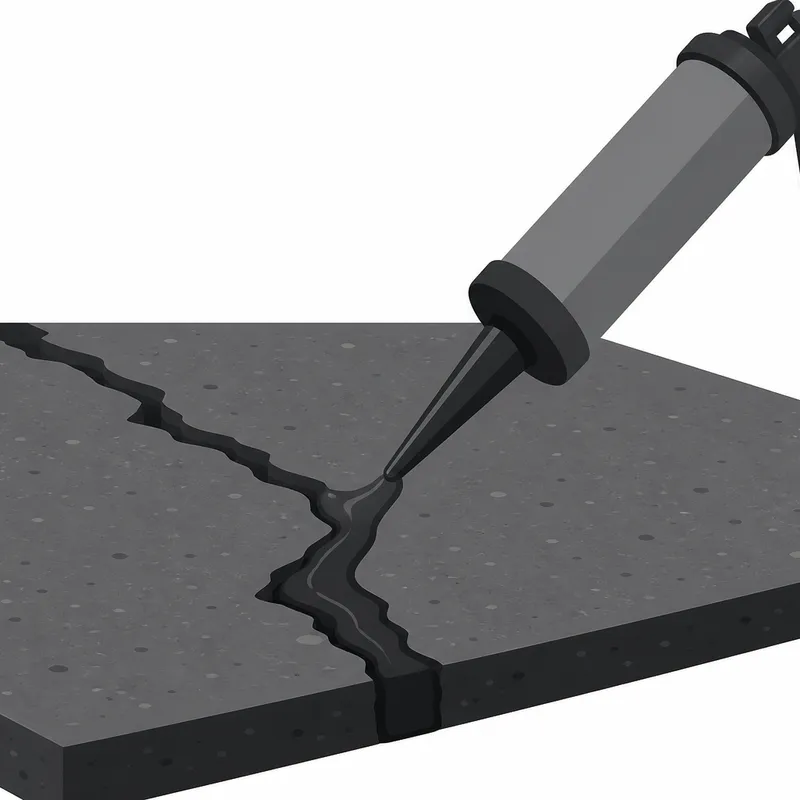
Crack sealing is the most cost-effective pavement maintenance you can perform — water entering cracks destroys the base layer and leads to potholes and alligator fatigue. The EstiCube crack sealing calculator breaks down what professional pavement preservation contractors include: routing, compressed-air cleaning, hot-applied rubberized sealant, overband width, and mobilization.
Enter total linear feet of cracks, average crack width, and any alligator-cracked areas needing skin patch. Results show sealant pounds or gallons, routing labor, mobilization, and a realistic installed cost based on 2026 US commercial averages.
Asphalt crack sealing cost per linear foot
Crack sealing is quoted per linear foot of crack. These 2026 US rates cover hairline cracks; medium cracks (1/4 to 1/2 in.) cost about 1.4x and wide cracks about 2x.
| Method | Material | Labor | Per linear ft | Wide cracks |
|---|---|---|---|---|
| Cold-pour crack filler | $0.35 | $0.45 | $0.80 | $1.60 |
| Hot rubberized asphalt | $0.85 | $0.65 | $1.50 | $3.00 |
| Routed & sealed (hot) | $1.10 | $0.85 | $1.95 | $3.90 |
Routing before sealing adds $0.40 per linear foot and roughly doubles service life on working cracks. Mobilization is $275 and the minimum job charge is $350.
How much does pavement crack sealing cost?
Commercial pavement crack sealing in the United States typically costs $0.85–$2.50 per linear foot installed, depending on crack width, routing requirements, and lot accessibility. Hairline cracks filled without routing run $0.75–$1.25/LF; routed and sealed cracks ½–1 inch wide cost $1.25–$2.50/LF with overbanding.
Mobilization and minimum trip charges range from $350–$750 for melter equipment, propane, and a two-person crew. Small jobs under 500 LF often hit the minimum rather than scaling by footage. Hot-pour rubberized sealant costs $85–$140 per 30-lb block — roughly 150–200 linear feet per block at standard overband width.
Alligator-cracked areas (interconnected block cracking) cannot be crack-sealed effectively — they need skin patch ($2.50–$5.00/sq ft) or full-depth patch ($8–$15/sq ft) before sealcoating. Budget crack sealing annually or biennially as part of a pavement preservation program.
What is included in a professional crack sealing bid
Professional crack sealing follows a defined process: route cracks to a uniform width and depth (typically ½ inch × ½ inch), blow clean with compressed air and heat lance, apply hot-pour rubberized sealant at 380–400°F, and overband 2–3 inches wide with a squeegee or bander. Cold-pour products are used only for residential DIY — commercial specs require hot applied.
Material takeoffs estimate sealant by crack volume and overband area. A 3,000 LF parking lot with average ½-inch cracks uses roughly 15–25 blocks of hot-pour rubber (450–750 lbs). Routing adds 30–50% to labor time but doubles sealant life by creating a reservoir for movement.
Our calculator separates linear-foot crack sealing from alligator patch square footage so you can budget preservation work before committing to full overlay or reconstruction.
When to crack seal and pavement preservation strategy
Crack seal when pavement is dry and cracks are free of vegetation, sand, and standing water. Best seasons are spring and fall when pavement is 40–80°F — hot summer application on scorching asphalt can cause tracking before cure. Do not crack seal immediately before rain.
Integrate crack sealing into a three-year pavement maintenance cycle: year one crack seal, year two sealcoat, year three restripe and reassess. Lots with more than 25% alligator cracking or base failure need engineering evaluation — preservation dollars are wasted on structurally failed pavement.
Federal and state DOT specifications (ASTM D6690 Type I/II/III) govern sealant grade by climate zone. Type III high-modulus rubber is standard for parking lots in freeze-thaw regions; Type I low-modulus suits mild climates with less thermal movement.
How to use the crack sealing calculator
- Walk the lot and measure total linear feet of cracks — use a wheel measure or scale from a site plan.
- Estimate average crack width: hairline (under ¼ in.), moderate (¼–½ in.), or wide (½–1 in.).
- Select routing if cracks are dirty, irregular, or spec requires reservoir cutting.
- Enter square footage of alligator-cracked areas needing skin patch instead of linear crack fill.
- Enable mobilization for jobs under 2,000 LF that will hit minimum trip charges.
- Review sealant quantity, routing labor, prep, material cost, and total installed price per linear foot.
Crack sealing calculator FAQ
How much does crack sealing cost per linear foot?
Professional hot-pour crack sealing costs $0.85–$2.50 per linear foot in 2026. Simple overband fill on clean cracks runs $0.75–$1.25/LF. Routed and sealed cracks with compressed-air cleaning cost $1.25–$2.50/LF. Wide cracks over 1 inch may need backer rod and multiple passes. Small jobs under 500 LF often pay a $350–$750 minimum instead of per-foot pricing.
How many linear feet per block of crack sealant?
One 30-lb block of hot-pour rubberized sealant covers roughly 150–200 linear feet at standard 2–3 inch overband width on ½-inch cracks. Coverage drops on wider cracks and routed reservoirs. A 5,000 LF lot typically needs 25–35 blocks (750–1,050 lbs). Our calculator estimates sealant from crack width, depth, and overband area.
What is crack routing and do I need it?
Routing cuts a uniform reservoir (usually ½ in. × ½ in.) along the crack path before sealing. It removes debris, creates clean sidewalls, and doubles sealant life by allowing proper fill depth. Routing adds $0.40–$0.80/LF to the job but is specified on most commercial and DOT preservation projects. Skip routing only on clean, uniform hairline cracks.
Can you crack seal alligator cracking?
No — alligator (fatigue) cracking indicates base layer failure. Hot-pour sealant cannot bridge interconnected cracks that move independently. Alligator areas need skin patch (1–2 inches of hot mix over the cracked surface), full-depth patch, or mill-and-overlay. Our calculator treats alligator areas as square-footage patch work, not linear-foot crack sealing.
Hot pour vs cold pour crack filler — which is better?
Hot-pour rubberized sealant (ASTM D6690) is the commercial standard — it bonds to asphalt, flexes with thermal movement, and lasts 3–7 years. Cold-pour latex or asphalt-based fillers from big-box stores suit small residential driveways but fail within 6–18 months on commercial lots due to poor adhesion and shrinkage. Always specify hot applied for parking lots.
How often should parking lot cracks be sealed?
Crack seal active cracks every 1–2 years as part of pavement preservation. New cracks appear each freeze-thaw cycle — annual walk-through inspections catch them before water reaches the base. Pair crack sealing with sealcoating every 2–3 years for a complete maintenance program costing far less than premature reconstruction.
Should crack sealing be done before or after sealcoating?
Always crack seal before sealcoating. Hot rubberized filler must cure 24–48 hours, then sealcoat covers the overband for a uniform appearance. Sealcoating first then filling cracks leaves visible ridges and poor adhesion at crack edges. Schedule crack sealing, then sealcoat, then restripe in that order.
What is the best temperature for crack sealing?
Apply hot-pour sealant when pavement surface temperature is 40°F and rising, ideally 50–80°F. Sealant is heated to 380–400°F in the melter kettle and cools to pavement temperature within minutes. Avoid application when rain is forecast within 24 hours or when pavement is wet. Spring and fall are optimal in most US climates.
Sources
- Materials and Procedures for Sealing and Filling Cracks in Asphalt-Surfaced Pavements (FHWA-RD-99-147) — Federal Highway Administration
- Pavement Preservation Checklist Series 1 — Crack Seal Application — Federal Highway Administration
- D6690 Standard Specification for Joint and Crack Sealants, Hot Applied, for Concrete and Asphalt Pavements — ASTM International
- Pavement Preservation — Federal Highway Administration
Related calculators
Projects often planned together — jump to a related estimator for the next line item.
Sealcoating
Calculate sealcoat gallons and cost for parking lots and commercial pavement. Includes mobilization, crack prep, traffic control, and two-coat application.
Pothole
Estimate pothole patch count, cold mix bags, saw-cut prep, and repair cost for parking lots and commercial pavement. Includes mobilization minimums.
Asphalt
Calculate tons of hot-mix asphalt for driveways and overlays. Includes gravel base, sealcoating, and paving cost estimates.
Striping
Estimate pavement marking linear feet, traffic paint gallons, and striping cost. Includes stalls, ADA symbols, fire lanes, arrows, and mobilization.
More commercial calculators
Striping, sealcoating, potholes, signs, sweeping & curbing
Explore all 4 categories
Browse every free EstiCube tool by project type — home builds, outdoor hardscape, landscape, and commercial pavement.
View full calculator directory