Parking Wheel Stop Calculator
Calculate wheel stop count, material cost, and installed price for parking stalls, retail pads, and garage structures. Includes rubber, concrete, and recycled plastic parking blocks with anchor hardware and re-striping.
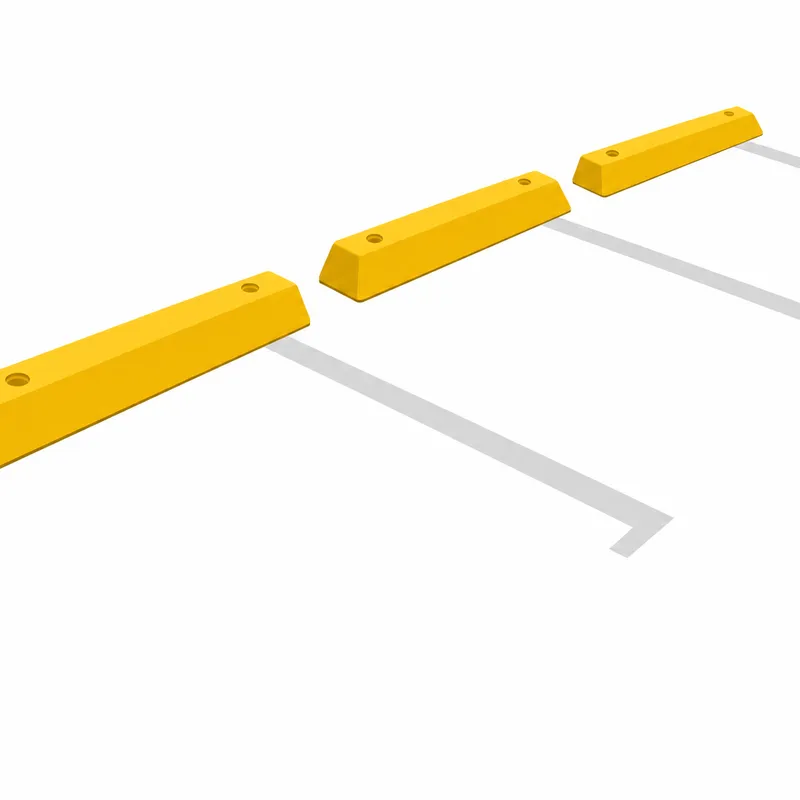
Wheel stops — also called parking blocks, curb stops, or car stops — prevent vehicles from overshooting stalls and protect pedestrians, landscaping, and building facades. Installation cost varies by material, anchor type, and whether existing stops must be removed. The EstiCube wheel stop calculator breaks down what commercial site contractors include: stop supply, anchor bolts or rebar pins, adhesive, removal of old stops, and stall re-striping.
Enter stall count or linear footage along the stall nose, choose wheel stop material and length, and add optional removal of existing stops. Results show per-unit and total installed cost based on 2026 US commercial averages.
Wheel stop cost per unit, installed
Wheel stops are quoted per unit installed. These 2026 US rates cover a standard 6-foot stop; 7-foot stops add roughly 15% to both material and labor.
| Wheel stop type | Material | Labor | Installed cost each |
|---|---|---|---|
| Recycled plastic, 6 ft | $38 | $32 | $70 |
| Recycled rubber, 6 ft | $42 | $35 | $77 |
| Precast concrete, 6 ft | $55 | $45 | $100 |
| Add: rebar anchor pins | $12 | included | +$12 per stop |
| Add: painted stripes | $8 | included | +$8 per stop |
| Add: mobilization | flat | flat | $225 per job |
Minimum job charge is $350. Concrete stops cost the most up front but outlast rubber and plastic; plastic and rubber are lighter, easier to reset after a plow strike, and will not spall.
How much do parking wheel stops cost to install?
Commercial wheel stop installation in the United States typically costs $45–$120 per stop installed, depending on material and mount method. Recycled rubber wheel stops (6-foot length) run $45–$75 each installed with anchor bolts. Precast concrete stops cost $65–$110 each. Heavy-duty rubber stops with reflective tape add $10–$20 per unit.
Material-only pricing: standard 6-foot recycled rubber parking blocks cost $25–$45 each. Precast concrete stops (6×7×72 inches) run $35–$65 each. Installation labor with two anchors per stop adds $20–$55 per unit including drill bits, epoxy or wedge anchors, and cleanup. Removal and disposal of old concrete stops adds $15–$35 each.
Bulk stall programs of 50+ stops drop per-unit cost by 15–25% through shared mobilization. Minimum trip charges of $250–$450 apply to small jobs under 10 stops. Re-striping stall lines after stop repositioning costs $0.25–$0.45/LF additional.
Wheel stop materials and specifications
Recycled rubber: most common for retail and office parking — lightweight (35–45 lbs), resistant to UV and oil, available in safety yellow with reflective tape or blue for ADA-adjacent stalls. Standard length is 6 feet for standard 9×18 foot stalls; 4-foot stops for compact stalls.
Precast concrete: heaviest option (200–280 lbs) — best for high-traffic lots, truck lanes, and areas where stops may be struck repeatedly. Requires forklift or two-person lift for placement. Rebar pin or anchor bolt mounting into asphalt or concrete.
Recycled plastic (HDPE): mid-weight alternative gaining adoption — won't chip or crack like concrete, lighter than concrete for easier handling. Color-molded (yellow, blue, gray) with optional reflective strips.
Our calculator uses one 6-foot stop per standard parking stall as the default. ADA-compliant stalls typically use blue stops or standard yellow stops positioned to maintain required aisle width — verify local code before specifying.
Wheel stop placement and code requirements
Standard placement: wheel stops sit 2.5–3.5 feet from the stall nose (front of stall) in pull-in parking, measured from the stop face to the stall line. This prevents front bumpers from overhanging into pedestrian walkways while keeping rear tires clear of the stall line. In angled stalls, stops align along the stall nose uniformly.
Never place wheel stops where they could interfere with ADA accessible routes or reduce aisle width below 24 feet for van-accessible aisles. Some jurisdictions require stops in all non-ADA stalls but prohibit them in ADA stalls to allow side-loading wheelchair lifts.
Anchor into asphalt with ½-inch wedge anchors or rebar pins minimum 8 inches deep; concrete substrates use epoxy-set anchors. Replace stops struck by snowplows or delivery trucks promptly — loose stops become trip hazards. Schedule installation before or after sealcoating to avoid drilling through fresh sealcoat.
How to use the wheel stop calculator
- Count parking stalls needing wheel stops — typically one stop per stall at the nose.
- Select wheel stop material: recycled rubber, precast concrete, or HDPE plastic.
- Choose stop length (6-foot standard, 4-foot compact) and whether reflective tape is required.
- Enable removal of existing stops if replacing damaged concrete blocks.
- Add re-striping if stall lines will be repainted after stop installation or repositioning.
- Review per-unit cost, anchor hardware, labor, and total installed project price.
Wheel stop calculator FAQ
How much does a parking wheel stop cost installed?
Installed parking wheel stops cost $45–$120 each in 2026 depending on material. Recycled rubber stops average $45–$75 installed. Precast concrete stops run $65–$110 installed. Material-only rubber stops cost $25–$45 each; professional installation adds $20–$55 per stop for anchors, drilling, and labor.
How many wheel stops do I need for my parking lot?
One wheel stop per standard parking stall at the stall nose is typical — a 100-stall lot needs 100 stops. Some property managers skip stops on end stalls against curbs or walls. ADA stalls may omit stops per local code. Enter your stall count into the calculator for a direct material and labor estimate.
Rubber vs concrete wheel stops — which is better?
Rubber stops are lighter, easier to install, won't crack, and absorb impact without damaging vehicle bumpers — standard for retail and office lots. Concrete stops are heavier and more durable in truck lanes, loading areas, and high-abuse locations but chip and crack over time. Rubber costs less installed; concrete lasts longer in heavy-duty applications.
How are wheel stops anchored in asphalt?
Standard installation uses two ½-inch diameter wedge anchors or rebar pins drilled 8–10 inches into asphalt or concrete, with the stop pre-drilled to match. Epoxy-set anchors are used in concrete substrates. Stops must sit flush and stable — a 200-pound pull test confirms anchor integrity. Asphalt less than 3 inches thick may need longer pins or a concrete pad beneath.
How far from the curb should wheel stops be placed?
Place wheel stops 2.5–3.5 feet from the front of the stall (stall nose line) in pull-in parking. This keeps the vehicle fully within the stall without overhanging the sidewalk or planter. Measure from the face of the stop to the stall stripe. Uniform placement across the lot prevents confusion and maintains consistent aisle clearance.
Do ADA parking stalls need wheel stops?
Many jurisdictions prohibit wheel stops in ADA accessible stalls because they interfere with wheelchair lift deployment and side-transfer space. Check your local ADA amendments and state building code. Non-ADA stalls typically require stops. Blue-colored stops are sometimes used to distinguish ADA-adjacent stalls but are not a universal requirement.
How long does wheel stop installation take?
An experienced crew installs 25–40 rubber wheel stops per day on open asphalt lots. Precast concrete stops install slower — 15–25 per day due to weight and positioning. A 100-stall lot takes 1–2 days including removal of old stops. No cure time required — stalls are usable immediately after anchor torque check.
Can wheel stops be installed over sealcoated asphalt?
Install wheel stops before sealcoating or wait until sealcoat fully cures (48–72 hours) before drilling. Drilling through fresh sealcoat compromises adhesion around anchor holes. If stops are replaced after sealcoating, dab cold patch or sealant around anchor holes to prevent water intrusion. Coordinate stop work with your sealcoating and striping schedule.
Sources
- Accessible Parking Spaces — ADA.gov (U.S. Department of Justice)
- ADA Compliance Brief: Restriping Parking Spaces — ADA.gov (U.S. Department of Justice)
- ADA Guide: Chapter 5 — Parking Spaces — U.S. Access Board
Related calculators
Projects often planned together — jump to a related estimator for the next line item.
Striping
Estimate pavement marking linear feet, traffic paint gallons, and striping cost. Includes stalls, ADA symbols, fire lanes, arrows, and mobilization.
Signs
Estimate regulatory, ADA, stop, and wayfinding sign counts with posts, footings, and installation cost for commercial parking lots.
Bollard
Estimate steel, concrete, and removable bollard supply and installation cost. Core drill, surface mount, paint, and mobilization for storefront protection.
Curbing
Estimate linear feet of mountable, barrier, and valley curb with concrete volume and install cost. Includes demo and mobilization for parking lots.
More commercial calculators
Striping, sealcoating, potholes, signs, sweeping & curbing
Explore all 4 categories
Browse every free EstiCube tool by project type — home builds, outdoor hardscape, landscape, and commercial pavement.
View full calculator directory