Commercial Epoxy Floor Coating Calculator
Calculate epoxy gallons, square footage coverage, and installed cost for warehouse floors, retail showrooms, auto service bays, and commercial kitchens. Includes diamond grind prep, moisture testing, primer, build coat, flake or quartz broadcast, and UV-stable topcoat.
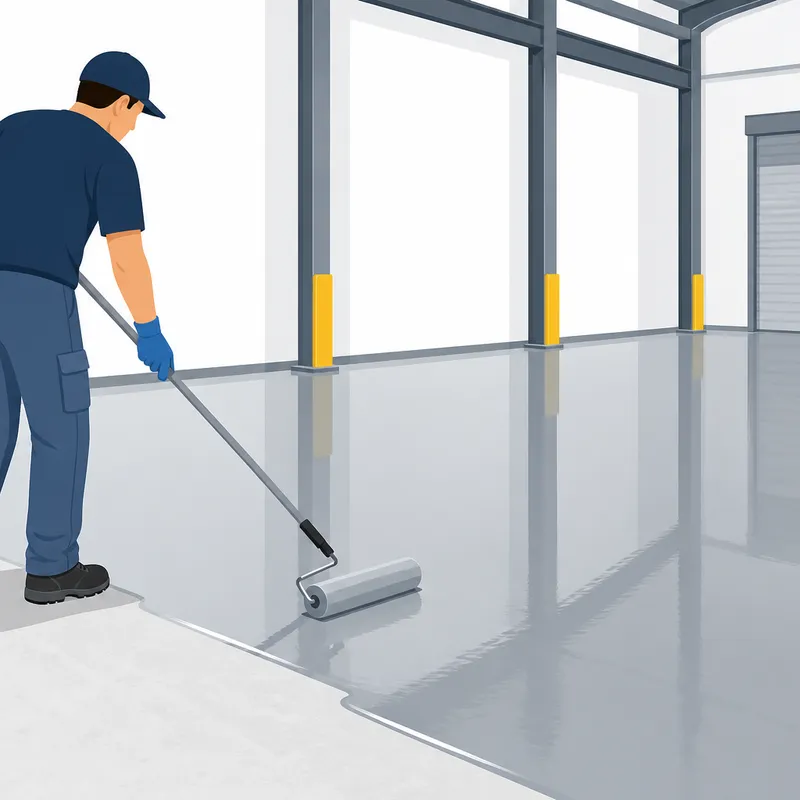
Commercial epoxy floor coatings transform bare concrete into durable, chemical-resistant surfaces — but bids swing dramatically based on prep depth, system build, and square footage. The EstiCube epoxy floor calculator breaks down what professional resinous flooring contractors include: diamond grinding, crack repair, moisture mitigation, primer, body coat, decorative broadcast, and clear topcoat with cove base options.
Enter floor area in square feet, choose system type from basic solid-color epoxy to full flake or quartz broadcast, and add optional prep line items. Results show gallons per coat, material cost, labor, and a realistic installed price based on 2026 US commercial averages.
Commercial epoxy floor coating cost per square foot
Epoxy flooring is quoted per square foot of finished floor. These 2026 US rates cover standard traffic loading; heavy-traffic specifications increase both material and labor.
| Epoxy system | Material | Labor | Per sq ft | Coverage |
|---|---|---|---|---|
| Thin-film coating (2-coat) | $2.80 | $3.50 | $6.30 | 400 sq ft / kit |
| Self-leveling epoxy | $4.50 | $5.00 | $9.50 | 200 sq ft / kit |
| Quartz broadcast system | $6.50 | $6.00 | $12.50 | 150 sq ft / kit |
| Metallic epoxy floor | $8.50 | $7.50 | $16.00 | 120 sq ft / kit |
Diamond grind surface prep adds $1.25 per sq ft and moisture mitigation adds $0.85 per sq ft; both are strongly recommended on older slabs, where skipping them is the usual cause of delamination. Mobilization is $450 and the minimum job is $1,200.
How much does commercial epoxy flooring cost?
Commercial epoxy floor coating in the United States typically costs $3.50–$12.00 per square foot installed, depending on system build and prep scope. Basic solid-color two-coat epoxy on prepped concrete runs $3.50–$5.50/sq ft. Full flake broadcast systems cost $5.50–$8.50/sq ft. Quartz sand mortar systems for heavy industrial and food processing reach $8.00–$12.00/sq ft.
Material breakdown: 100% solids epoxy primer covers 150–200 sq ft per gallon at 10 mils. Build coat with flake broadcast adds $0.80–$1.50/sq ft in flake and clear coat material. Diamond grinding prep runs $0.75–$1.50/sq ft — the single largest labor line item and non-negotiable for adhesion on existing concrete.
Small projects under 500 sq ft hit minimum charges of $1,200–$2,500 for mobilization, grinding equipment, and multi-day cure scheduling. Warehouse floors over 5,000 sq ft benefit from 15–30% volume pricing on per-foot rates.
Epoxy system types and where each is used
Solid-color epoxy (primer + pigmented build coat + clear topcoat): standard for warehouses, mechanical rooms, and back-of-house commercial space. Good chemical resistance, easy to clean, 5–10 year life with proper prep.
Flake broadcast (full vinyl chip throw): decorative and slip-resistant finish for retail showrooms, auto dealerships, and residential garages. Chips hide imperfections and add texture. UV-stable polyaspartic or polyurethane topcoat prevents yellowing on exposed areas.
Quartz mortar and urethane cement: heavy-duty systems for commercial kitchens, breweries, and food processing — withstand thermal shock, steam cleaning, and aggressive sanitizers. Thicker build (1/8–1/4 inch) with cove base at wall transitions.
Our calculator covers solid-color and flake systems — the most common commercial specs. Moisture mitigation epoxy primers add $1.00–$2.50/sq ft when calcium chloride tests exceed 3–4 lbs/24hr/1,000 sq ft.
Surface prep and what drives epoxy cost
Diamond grinding (CSP 3–4 profile) is the industry standard prep method — removes laitance, opens concrete pores, and creates mechanical bond for epoxy primer. Shot blasting suits large warehouse floors; acid etching is rarely specified on commercial work due to inconsistent profiles and environmental restrictions.
Crack repair with epoxy paste or polyurea, joint filling with semi-rigid polyurea, and oil contamination removal add prep time before coating. New concrete must cure 28 days minimum and pass moisture tests. Existing coatings must be fully removed — epoxy does not bond to sealed or painted concrete without complete stripping.
Cure time: foot traffic in 24 hours, vehicle traffic in 72 hours, full chemical cure in 7 days. Temperature must stay 50–90°F during application and cure. Schedule around production downtime — most commercial installs happen over weekends or holiday shutdowns.
How to use the epoxy floor calculator
- Measure floor area in square feet — exclude walls, equipment pads already coated, and non-traffic zones.
- Select system type: solid-color epoxy, flake broadcast, or heavy-duty quartz mortar.
- Rate existing concrete condition: new/clean, moderate wear, or heavy contamination requiring extra grinding.
- Add moisture mitigation if calcium chloride tests indicate elevated vapor transmission.
- Include cove base linear feet if spec requires 4–6 inch radius at wall and column transitions.
- Review gallons per coat, prep cost, material, labor, and total installed price per square foot.
Epoxy floor coating calculator FAQ
How much does epoxy flooring cost per square foot?
Commercial epoxy flooring costs $3.50–$12.00/sq ft installed in 2026. Basic two-coat solid color runs $3.50–$5.50/sq ft. Flake broadcast systems cost $5.50–$8.50/sq ft. Industrial quartz and urethane cement systems reach $8.00–$12.00/sq ft. Prep (diamond grinding) is included in installed pricing and represents 30–40% of total cost on existing concrete.
How many gallons of epoxy per square foot?
100% solids epoxy primer covers 150–200 sq ft per gallon at 10 mils wet film thickness. Build coat with flake broadcast uses 1–1.5 gallons per 100 sq ft across primer, color coat, and clear topcoat combined. A 5,000 sq ft warehouse floor needs roughly 35–50 gallons total across all coats depending on system build. Our calculator estimates by coat and system type.
How long does commercial epoxy flooring last?
Properly installed commercial epoxy lasts 5–10 years in warehouses and 7–15 years in light-traffic showrooms before recoat. Life depends on prep quality, traffic load, chemical exposure, and UV exposure (topcoat selection). Flake systems with polyaspartic topcoats resist hot-tire pickup and yellowing better than basic epoxy in garages and retail.
Do I need to grind concrete before epoxy?
Yes — diamond grinding to CSP 3–4 profile is required for mechanical adhesion on commercial projects. Epoxy applied to smooth, sealed, or dirty concrete delaminates within months. Grinding costs $0.75–$1.50/sq ft and is the most important step. Acid etching is not accepted on most commercial specs due to inconsistent results.
What is moisture mitigation for epoxy floors?
Concrete slabs with moisture vapor emission above 3–4 lbs per 24 hours (calcium chloride test) need an epoxy moisture barrier primer before standard coating. Failure to mitigate causes blistering and delamination. Moisture mitigation adds $1.00–$2.50/sq ft. Always test — do not assume new concrete is dry enough to coat.
Epoxy vs polyaspartic vs polyurethane topcoat?
Epoxy build coats provide thickness and chemical resistance but yellow under UV without a topcoat. Polyaspartic topcoats cure faster (same-day return to service), resist UV yellowing, and handle hot tires — standard for garages and showrooms. Polyurethane adds scratch and abrasion resistance as a final clear coat. Most commercial specs use epoxy base + polyaspartic or polyurethane topcoat.
Can epoxy be applied over existing epoxy or paint?
Only if the existing coating is well-bonded, abraded to a dull profile, and compatible. Most contractors recommend full removal when switching systems or when existing coating shows any delamination. Partial adhesion failure under a new coat fails the entire floor. Budget $0.50–$1.25/sq ft for coating removal when needed.
How long before vehicles can drive on epoxy?
Light foot traffic: 24 hours. Forklifts and vehicles: 72 hours minimum, 7 days for full chemical cure on heavy-duty systems. Polyaspartic topcoats allow same-day or next-day vehicle return on some specs. Do not turn wheels sharply or use jack stands on fresh coating — mark the floor and communicate cure schedule to tenants before reopening.
Sources
- Occupational Exposure to Respirable Crystalline Silica — Construction — Occupational Safety and Health Administration (OSHA)
- Control of Silica Dust in Construction — Handheld Grinders — Occupational Safety and Health Administration (OSHA)
- 1910.94 — Ventilation (Spray Finishing and Coating Operations) — Occupational Safety and Health Administration (OSHA)
- Architectural Coatings: National Volatile Organic Compounds Emission Standards — U.S. Environmental Protection Agency (EPA)
Related calculators
Projects often planned together — jump to a related estimator for the next line item.
Bollard
Estimate steel, concrete, and removable bollard supply and installation cost. Core drill, surface mount, paint, and mobilization for storefront protection.
Concrete
Calculate cubic yards of concrete for slabs, driveways, and sidewalks. Includes bags, rebar, delivery, and pour cost estimates.
Striping
Estimate pavement marking linear feet, traffic paint gallons, and striping cost. Includes stalls, ADA symbols, fire lanes, arrows, and mobilization.
House
Full home construction estimator — foundation, basement, framing, roof, MEP & finishes. Cost ranges for every building phase.
More commercial calculators
Striping, sealcoating, potholes, signs, sweeping & curbing
Explore all 4 categories
Browse every free EstiCube tool by project type — home builds, outdoor hardscape, landscape, and commercial pavement.
View full calculator directory