Mulch Calculator
Estimate cubic yards, bag count, delivery, and spreading cost for hardwood, cedar, pine bark, cypress, and rubber mulch. Rectangle beds or round tree rings with adjustable depth.
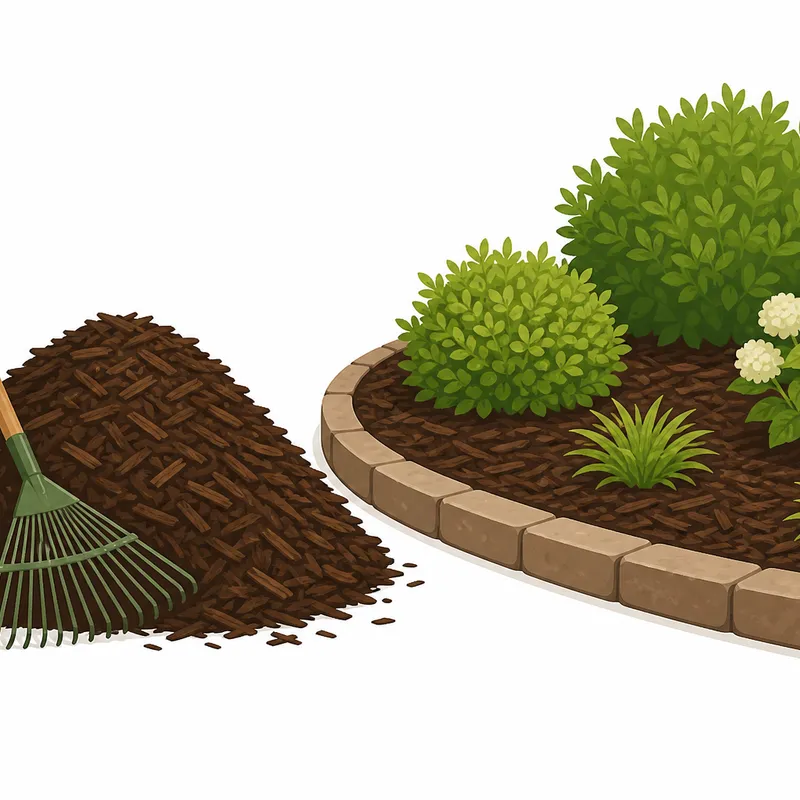
Too little mulch leaves bare soil and extra trips to the landscape yard; too much wastes money and can smother plant roots. The EstiCube mulch calculator converts your bed dimensions into cubic yards, bag quantities, and a realistic material budget using 2026 US supplier averages.
Enter bed length and width (or diameter for tree rings), choose mulch type and depth, and get order quantities with optional delivery and spreading labor — before you schedule a bulk dump or load up on bags.
How much does mulch cost in the US?
Bulk hardwood mulch in the United States typically costs $30–$55 per cubic yard for double-shredded hardwood, plus $75–$125 delivery on loads under 8–10 cubic yards. Cedar and cypress run $45–$65/cu yd. Rubber mulch for playgrounds costs $80–$120/cu yd but lasts years longer than organic mulch.
Bagged mulch from big-box stores costs $3–$5 per 2 cu ft bag — about $40–$68 per cubic yard equivalent, far more than bulk delivery for beds over 3 cubic yards. A 30×4 ft bed at 3-inch depth needs about 1.1 cubic yards.
Professional spreading and bed edging adds $25–$40 per cubic yard. Refresh organic mulch annually in spring; hardwood fades to gray within 6–12 months unless color-dyed.
How deep should mulch be?
Landscape beds: 2–4 inches of mulch, refreshed yearly. Tree rings: 2–3 inches, keeping mulch 3–6 inches away from trunks to prevent rot. Playground rubber mulch: 6 inches minimum for fall protection per ASTM guidelines.
Do not exceed 4 inches of organic mulch — deeper layers block water and air to roots. Pull old mulch back before adding new material if total depth would exceed 4 inches. Install landscape fabric only under stone, not organic mulch (it prevents decomposition benefits).
Mulch ordering tips
Measure beds in feet and depth in inches — the calculator converts to cubic yards with a 5% allowance for settlement. For curved or irregular beds, break into rectangles and add volumes together.
Bulk delivery dumps on your driveway — have a tarp underneath and plan to spread the same day. Dyed mulch can stain concrete; rinse promptly if spillage occurs.
How to use the mulch calculator
- Measure your bed — rectangle for landscape borders, diameter for tree rings.
- Enter depth in inches (3 in. is standard for most ornamental beds).
- Select mulch type: hardwood for general beds, cedar for insect resistance, rubber for play areas.
- Keep 5% extra allowance for settlement unless topping up an existing layer.
- Enable delivery for bulk orders under 8 cubic yards; enable labor if hiring help to spread.
- Review cubic yards, bags (for small jobs), material cost, and total before ordering.
Mulch calculator FAQ
How do I calculate cubic yards of mulch?
Multiply length × width × depth in feet to get cubic feet, then divide by 27. Example: 30 ft × 4 ft × (3/12) ft = 30 cu ft ÷ 27 = 1.1 cubic yards. For circles use π × radius² × depth ÷ 27. Our calculator does this automatically with a 5% settlement allowance.
How many 2 cu ft bags equal a cubic yard?
One cubic yard equals 13.5 two-cubic-foot bags (27 cu ft ÷ 2). Bags suit small beds under 2–3 cubic yards. Above that, bulk delivery from a landscape supply yard is significantly cheaper per yard.
How deep should mulch be in a flower bed?
Apply 2–4 inches of organic mulch in ornamental beds. Three inches is the most common depth — enough to suppress weeds and retain moisture without suffocating roots. Pull mulch back from plant stems and tree trunks.
How much does mulch delivery cost?
Local delivery of 2–8 cubic yards typically runs $75–$125 depending on distance. Many suppliers reduce or waive delivery on orders over 10 cubic yards. Our calculator adds a $95 planning allowance for loads under 8 cu yd when delivery is selected.
Cedar mulch vs hardwood — which is better?
Hardwood mulch is the most affordable and breaks down to enrich soil. Cedar resists insects and decay longer but costs more. Neither should touch foundations directly — keep a 6-inch gap to discourage termites and moisture wicking.
Should I use landscape fabric under mulch?
Landscape fabric under organic mulch is generally not recommended — it prevents mulch from improving soil and weeds grow on top anyway. Use fabric only under stone or gravel. Cardboard or newspaper layers work as a biodegradable weed barrier for new beds.
How often should I replace mulch?
Refresh organic mulch once a year in spring, adding 1–2 inches to maintain 2–4 inch total depth. Fluff existing mulch before topping up. Rubber mulch lasts 5–10+ years and only needs occasional raking to redistribute.
Will dyed mulch harm plants?
Modern color-enhanced mulch uses iron oxide or carbon-based dyes considered safe for landscape use. Avoid fresh dyed mulch against light siding or concrete until rain washes excess color. Natural undyed hardwood is safest near edible gardens.
Sources
- Mulch — A Survey of Available Options — Penn State Extension
- Mulch — Clemson Cooperative Extension Home & Garden Information Center
- Public Playground Safety Handbook — U.S. Consumer Product Safety Commission
- F1292-22 Standard Specification for Impact Attenuation of Surfacing Materials Within the Use Zone of Playground Equipment — ASTM International
Related calculators
Projects often planned together — jump to a related estimator for the next line item.
Topsoil
Calculate cubic yards of topsoil for lawn prep, garden beds, and yard leveling. Includes delivery and spreading cost estimates.
Sod
Calculate sod pallets and rolls for a new lawn. Square footage, delivery, and installation cost for Bermuda, bluegrass, and St. Augustine turf.
Gravel
Calculate cubic yards and tons of gravel for driveways, paths, and base fill. Free gravel calculator with delivery and spreading cost estimates.
Irrigation
Size sprinkler zones, heads, pipe, and water flow for your lawn. Free irrigation calculator with 2026 US install cost estimates.
Explore all 4 categories
Browse every free EstiCube tool by project type — home builds, outdoor hardscape, landscape, and commercial pavement.
View full calculator directory