Sod Calculator
Estimate sod pallets, rolls, delivery, and installation cost for a new lawn. Rectangle dimensions or total square footage with grass type and cutting waste allowance.
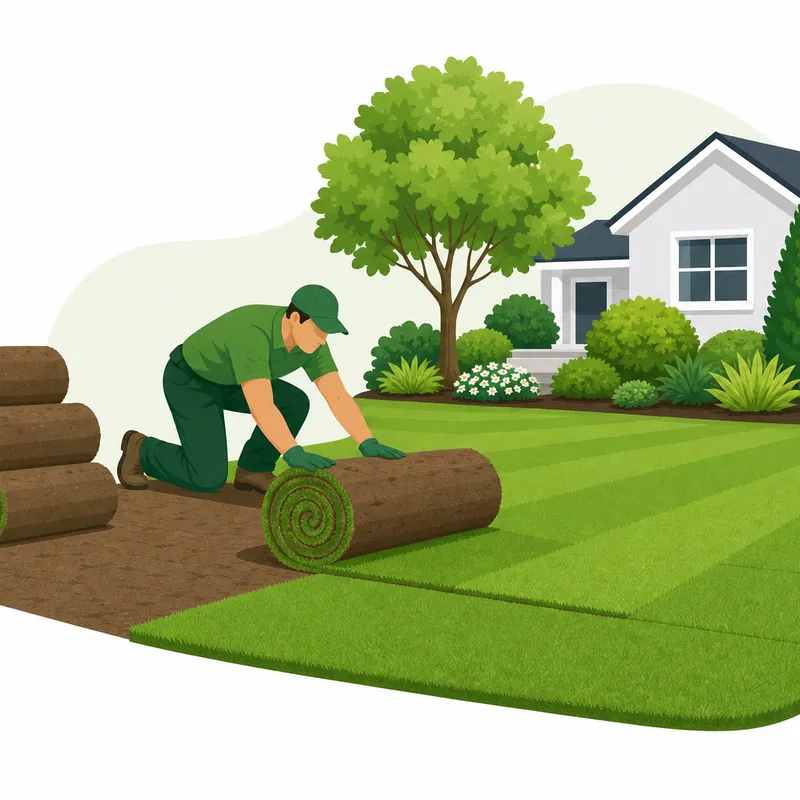
Ordering too little sod leaves bare patches that take weeks to fill in; ordering too much means wasted pallets sitting in the sun. The EstiCube sod calculator converts your lawn dimensions into pallets, rolls, and a realistic budget using 2026 US turf farm and installer averages.
Enter lawn length and width or total square footage, choose your grass variety, and get order quantities with optional delivery and professional installation — before you schedule the sod truck.
How much does sod cost in the US?
Sod in the United States is sold by the pallet (400–500 sq ft) or individual roll (8–10 sq ft). Bermuda grass pallets average $150–$220; Kentucky bluegrass $200–$280; St. Augustine $240–$320 in warm climates. A 50×30 ft lawn (1,500 sq ft) needs about 4 pallets — roughly $740–$1,060 in material.
Professional sod installation adds $0.40–$0.70 per square foot including soil prep, laying, and initial watering. DIY homeowners save labor but must grade, amend soil, and water aggressively the first two weeks.
Delivery fees run $75–$175 for residential loads. Sod must be installed within 24 hours of delivery — have the site prepped and helpers ready before the truck arrives.
Choosing the right sod variety
Bermuda grass thrives in full sun and warm climates (USDA zones 7–10) — the most affordable and drought-tolerant option. Kentucky bluegrass suits northern lawns with cold winters. Tall fescue handles shade and transition zones. St. Augustine is the standard warm-season grass for Gulf Coast and Florida lawns.
Match sod to your sun exposure and climate. Cool-season grasses (bluegrass, fescue) green up in spring and fall; warm-season grasses (Bermuda, St. Augustine) peak in summer and go dormant brown in winter.
How to use the sod calculator
- Measure your lawn — rectangle for simple yards, or total sq ft for irregular shapes.
- Add 10% waste for cutting edges, curves, and seams between rolls.
- Select grass type matched to your climate and sun conditions.
- Enable delivery for orders under 2,000 sq ft.
- Enable installation labor if hiring a landscape crew.
- Review pallets, rolls, material cost, and total before ordering.
Sod calculator FAQ
How do I calculate how much sod I need?
Multiply lawn length × width in feet to get square footage, add 10% for cutting waste, then divide by 450 sq ft per pallet. Example: 50×30 ft = 1,500 sq ft + 10% = 1,650 sq ft ÷ 450 = 3.7 pallets — order 4 pallets.
How many square feet are in a pallet of sod?
Most US sod pallets cover 450–500 sq ft. Individual rolls are typically 2×5 ft (10 sq ft) or 2×4.5 ft (9 sq ft). Confirm coverage with your local sod farm — pallet sizes vary slightly by region and grass type.
How much does sod installation cost?
Professional sod installation runs $0.40–$0.70 per square foot including soil prep, laying, and rolling. A 1,500 sq ft lawn costs $600–$1,050 for labor alone. DIY installation saves labor but requires proper grading and daily watering.
Bermuda vs St. Augustine sod — which is better?
Bermuda is more drought-tolerant and affordable but needs full sun. St. Augustine tolerates partial shade and is the standard in Florida and Gulf Coast lawns but uses more water. Choose based on your climate zone and sun exposure.
How long does it take sod to root?
New sod roots in 10–14 days with daily watering. Avoid heavy foot traffic for 2–3 weeks. First mowing when grass reaches 3–4 inches — usually 2–3 weeks after installation. Full establishment takes 4–6 weeks.
Should I put topsoil down before sod?
Yes — grade the area, remove debris, and add 1–2 inches of quality topsoil or compost if existing soil is poor clay or compacted. Rake smooth, roll lightly, and water the soil before laying sod for best root contact.
What time of year is best to lay sod?
Cool-season grass (bluegrass, fescue): early fall or spring. Warm-season grass (Bermuda, St. Augustine): late spring through early fall when actively growing. Avoid laying sod in extreme heat or when ground is frozen.
Can I lay sod over existing grass?
No — kill or remove existing grass and weeds first. Laying sod over old turf leads to poor rooting, uneven surfaces, and disease. Use glyphosate or solarization, then till and grade before new sod.
Sources
- Establishing Your Florida Lawn (ENH-03/LH013) — UF/IFAS Extension
- Fertilization and Irrigation Needs for Florida Lawns and Landscapes (ENH860/EP110) — UF/IFAS Extension
- Lawn Establishment — Clemson Cooperative Extension Home & Garden Information Center
- USDA Plant Hardiness Zone Map — USDA Agricultural Research Service
Related calculators
Projects often planned together — jump to a related estimator for the next line item.
Topsoil
Calculate cubic yards of topsoil for lawn prep, garden beds, and yard leveling. Includes delivery and spreading cost estimates.
Mulch
Calculate cubic yards and bags of mulch for landscape beds and tree rings. Includes delivery and install cost for hardwood, cedar, and rubber mulch.
Irrigation
Size sprinkler zones, heads, pipe, and water flow for your lawn. Free irrigation calculator with 2026 US install cost estimates.
Fence
Estimate fence posts, panels, pickets, and installed cost per foot. Free fence material calculator for wood, vinyl, chain-link, and aluminum.
Explore all 4 categories
Browse every free EstiCube tool by project type — home builds, outdoor hardscape, landscape, and commercial pavement.
View full calculator directory