Paver Patio Calculator
Estimate paver count, gravel base, bedding sand, polymeric sand, edge restraint, and total installed cost. Supports concrete, brick, and natural stone in common US sizes and patterns.
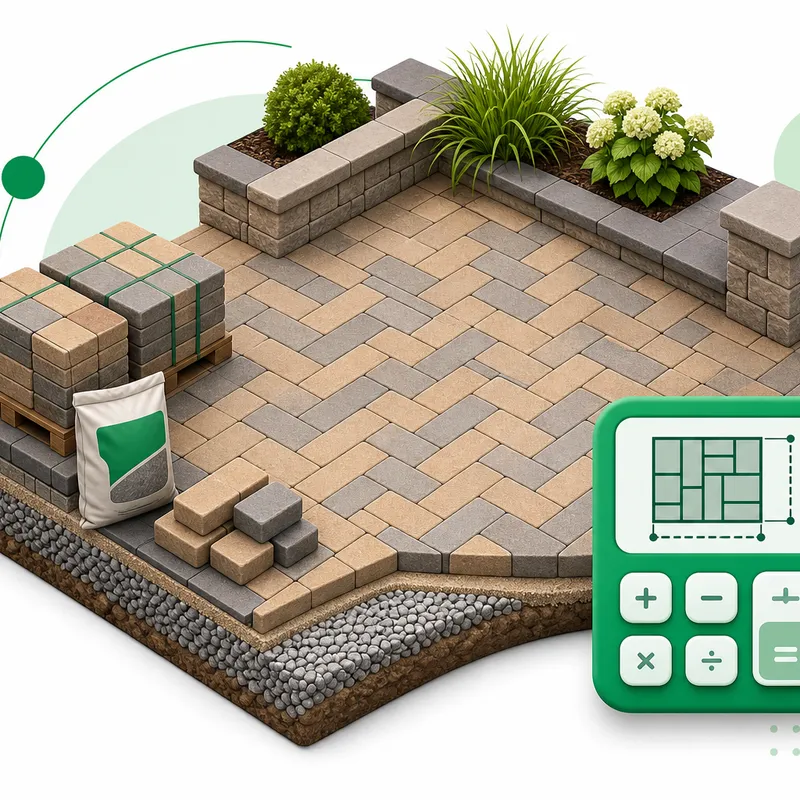
A paver patio or walkway looks straightforward until you price gravel delivery, count individual pavers, and account for cut waste on a herringbone layout. The EstiCube paver calculator turns your patio dimensions into a full hardscape takeoff and installed cost estimate using 2026 US national averages.
Enter length and width, pick paver size and material, choose your install pattern, and get paver quantities, base material in cubic yards, joint sand bags, edge restraint, and a realistic budget before you order from a landscape supply yard or compare contractor bids.
How much does a paver patio cost in the US?
Installed paver patio costs in the United States typically range from $12 to $35 per square foot, depending on material, pattern complexity, base prep, and access. A 280 sq ft (20×14 ft) concrete paver patio often runs $3,400–$5,600 installed. The same area in natural stone can reach $7,000–$12,000.
Material breakdown: concrete pavers $3–$6/sq ft, brick $5–$9/sq ft, natural stone $9–$18/sq ft. Labor adds $7–$16/sq ft for excavation, base compaction, laying, cutting, and joint sand. Gravel and sand base adds $1–$2/sq ft. Complex curves, steps, and retaining walls increase cost beyond this calculator baseline.
DIY paver projects save 40–55% on labor but require plate compactor rental ($60–$90/day), proper base grading, and 2–3 weekends for a mid-size patio. Use our material cost line as your DIY shopping budget.
Materials this paver calculator estimates
A proper interlocking paver installation includes compacted gravel sub-base (typically 4 inches of #57 stone), 1 inch of coarse bedding sand, pavers themselves, edge restraint pinned along the perimeter, geotextile fabric under the base, and polymeric sand swept into joints after compaction.
Paver count is based on your unit size and pattern waste — running bond adds about 8% waste, herringbone about 12%, basket weave about 10%. Add extra waste for curved borders or diagonal layouts. One cubic yard of gravel covers roughly 80 sq ft at 4-inch depth; sand covers about 320 sq ft at 1-inch depth.
Paver patio planning tips
Call 811 before digging. Slope the finished patio 1/4 inch per foot away from the house for drainage. Compact each base layer with a plate compactor — loose gravel is the #1 cause of paver settling and uneven surfaces.
Order 10% extra pavers from the same lot for future repairs — color batches vary between production runs. Allow sand and pavers to acclimate dry before polymeric sand application. Most municipalities do not require permits for at-grade patios under 200 sq ft, but check local rules for raised patios and driveways.
How to use the paver calculator
- Measure your planned patio or walkway length and width in feet at the outer edges.
- Select paver size — 4×8 inches is the most common US patio paver; larger slabs suit modern designs.
- Choose material: concrete for value, brick for classic look, natural stone for premium finishes.
- Pick install pattern. Herringbone is strongest for driveways; running bond is simplest for DIY.
- Confirm base depths (4 in. gravel + 1 in. sand is standard) and enable edge restraint for patios.
- Review paver count, gravel and sand cubic yards, polymeric sand bags, and total installed cost.
Paver calculator FAQ
How many pavers do I need per square foot?
Divide 144 by the paver area in square inches. A 4×8 inch paver covers 32 sq in, so you need 4.5 pavers per sq ft before waste. A 12×12 inch paver needs exactly 1 per sq ft. Add 8–15% waste depending on pattern and cuts. Our calculator rounds up to whole pavers automatically.
How much gravel base do I need for pavers?
Multiply patio square footage by base depth in feet, then divide by 27 for cubic yards. A 200 sq ft patio with 4-inch base: 200 × (4/12) ÷ 27 = 2.5 cubic yards. Order 10% extra for compaction settlement. Use crushed stone (#57 or CA-6), not pea gravel — angular stone locks together when compacted.
How much sand do I need under pavers?
Bedding sand is typically 1 inch deep after compaction. One cubic yard covers roughly 320 sq ft at 1-inch depth. Do not use fine mason sand for the base bed — use coarse concrete sand or ASTM C33 bedding sand. Screed sand level before laying pavers.
How much polymeric sand do I need?
One 50-pound bag of polymeric joint sand covers approximately 50–75 sq ft on standard 4×8 pavers with 1/8–3/16 inch joints. Narrow joints on tight patterns use less; wide joints on large slabs use more. Our calculator assumes 55 sq ft per bag as a planning average.
What paver pattern has the least waste?
Running bond (brick pattern) and stack bond produce the least cut waste — about 5–10% extra pavers. Herringbone uses 10–15% waste due to edge cuts but offers superior interlock for driveways and heavy foot traffic. Circular and fan patterns can exceed 15–20% waste.
Concrete pavers vs natural stone — which is cheaper?
Concrete pavers cost $3–$6/sq ft for materials vs $9–$18/sq ft for natural stone like travertine or bluestone. Concrete offers consistent color, higher strength (8,000+ PSI), and easier replacement. Natural stone provides unique character but higher material cost and more labor for irregular sizing.
Do I need edge restraint for a paver patio?
Yes — edge restraint (plastic or aluminum L-profile with spikes) prevents pavers from migrating outward under load and freeze-thaw cycles. Skipping edge restraint is a common DIY mistake that leads to spreading joints within 1–2 seasons. Budget one 8-foot section per 8 linear feet of perimeter.
Can I install pavers over an existing concrete slab?
Thin pavers (1-inch overlay) can install over sound, crack-free concrete with proper adhesive or sand bedding. Standard 2–3/8 inch pavers need excavation and full gravel base — do not lay thick pavers directly on dirt or grass. This calculator assumes a full gravel-and-sand base installation.
Sources
- Proper Concrete Paver Base and Depth: What to Know and Why It Matters — Concrete Masonry and Hardscapes Association (formerly ICPI)
- Guide Specification PAV-GSP-011-21: Concrete Pavers and Bedding Sand Over Compacted Aggregate Base — Concrete Masonry and Hardscapes Association (formerly ICPI)
- C33/C33M Standard Specification for Concrete Aggregates — ASTM International
- 811 Before You Dig — Call Before You Dig Every Time — Common Ground Alliance
Related calculators
Projects often planned together — jump to a related estimator for the next line item.
Gravel
Calculate cubic yards and tons of gravel for driveways, paths, and base fill. Free gravel calculator with delivery and spreading cost estimates.
Concrete
Calculate cubic yards of concrete for slabs, driveways, and sidewalks. Includes bags, rebar, delivery, and pour cost estimates.
Deck
Estimate decking boards, joists, footings, and total installed cost. Free deck material calculator with 2026 US price averages for wood, composite, and PVC.
Asphalt
Calculate tons of hot-mix asphalt for driveways and overlays. Includes gravel base, sealcoating, and paving cost estimates.
More outdoor projects calculators
Decks, pavers, asphalt driveways, fences & hardscape
Explore all 4 categories
Browse every free EstiCube tool by project type — home builds, outdoor hardscape, landscape, and commercial pavement.
View full calculator directory