Pothole Repair Calculator
Calculate pothole count, patch material, edge prep, and installed repair cost for parking lots, drive lanes, and commercial asphalt surfaces. Includes cold patch, hot mix infrared, and throw-and-roll methods.
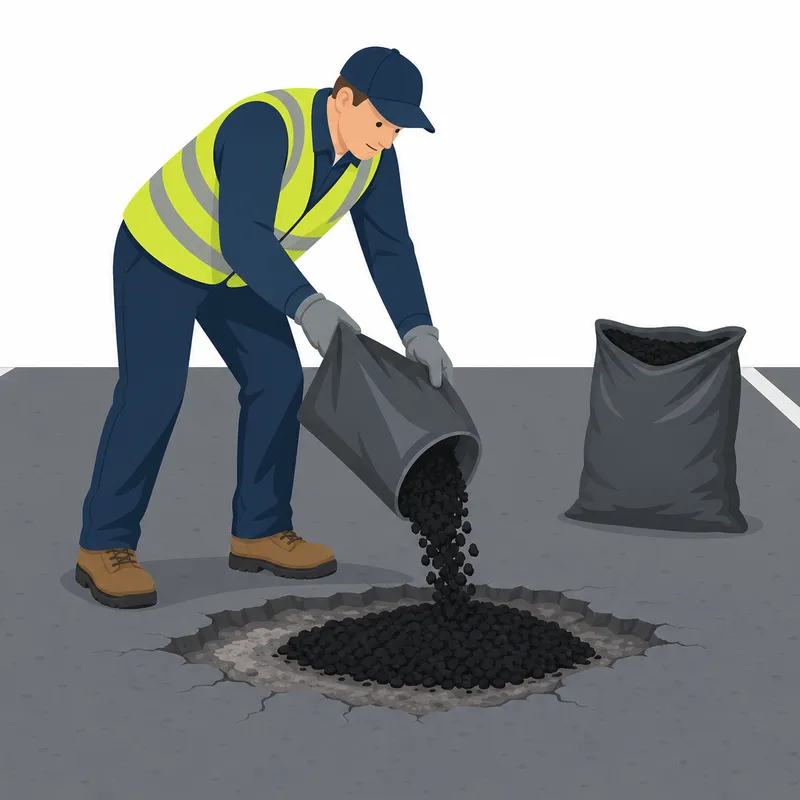
Potholes form when water infiltrates cracked asphalt, freezes, and breaks the pavement structure — and repair costs vary widely depending on patch method, pothole depth, and whether edge milling is required. The EstiCube pothole repair calculator breaks down what professional pavement contractors include: saw-cut or mill edges, tack coat, hot mix or cold patch material, compaction, and traffic control.
Enter pothole count and average dimensions, choose repair method, and add optional line items like infrared seamless patching or base stabilization. Results show material quantity, labor, mobilization, and a realistic installed cost based on 2026 US commercial averages.
Pothole repair cost per patch
Pothole repair is quoted per patch, sized by the hole. These 2026 US rates cover a small patch under 2 sq ft; medium patches cost about 1.4x and large patches about 1.9x.
| Repair method | Material | Labor | Small patch | Large patch |
|---|---|---|---|---|
| Cold patch (bagged) | $28 | $45 | $73 | $139 |
| Hot mix asphalt | $35 | $55 | $90 | $171 |
| Infrared seamless repair | $42 | $85 | $127 | $241 |
Mobilization is $325 per trip and the minimum job charge is $400, so batching repairs into a single visit lowers cost per patch substantially. Infrared costs the most but leaves no cold joint to fail.
How much does pothole repair cost?
Commercial pothole repair in the United States typically costs $75–$250 per pothole for standard throw-and-roll hot mix patching, with most parking lot repairs landing at $100–$175 each for potholes 12–24 inches in diameter. Large potholes over 3 square feet or full-depth failures run $250–$600 each when saw-cut edges and base repair are required.
Per-square-foot pricing for patch areas runs $8–$18/sq ft for hot mix with proper edge prep and compaction. Cold patch emergency repairs cost $12–$25/sq ft installed but fail faster — budget cold patch as temporary until permanent hot mix work can be scheduled. Infrared seamless patching costs $12–$22/sq ft and blends new asphalt into surrounding pavement without a cold joint.
Mobilization for pothole crews on lots under 10 repairs often triggers minimum trip charges of $350–$650 for hot box trailer, roller, and crew. Bulk repair programs of 25+ potholes drop per-unit cost by 20–35% through shared mobilization and route efficiency.
Pothole repair methods and when to use each
Throw-and-roll hot mix: loose hot asphalt placed in the pothole, compacted with a vibrating plate or roller — standard for parking lots when weather permits. Requires clean, dry pothole edges and tack coat on vertical faces for adhesion. Best for moderate-depth potholes on structurally sound base.
Saw-cut and patch: deteriorated area cut square, edges milled, base recompacted if needed, then hot mix placed in lifts and rolled — permanent repair for large potholes, alligator-cracked sections, and utility cuts. Adds $3–$8/sq ft over throw-and-roll for edge work.
Cold patch (instant asphalt): bagged or bulk cold mix tamped into potholes without heating — emergency and winter repairs when hot plants are closed. Expect 6–18 month life in high-traffic areas. Infrared patching heats existing pavement and fuses new mix seamlessly — premium option for visible drive lanes and retail entrances.
Our calculator uses average pothole dimensions and hot mix density to estimate tonnage. One cubic foot of compacted hot mix asphalt weighs roughly 145 pounds — a 2-inch deep 2×2 foot patch needs about 60 pounds of mix.
Preventing potholes and planning repair programs
Potholes rarely appear in isolation — they signal underlying drainage problems, failed crack sealing, or base erosion. A reactive patch program keeps liability down, but crack sealing ($0.85–$2.25/LF), sealcoating every 2–3 years, and proper catch basin maintenance prevent most pothole formation.
Schedule permanent hot mix repairs when ambient temperature is above 40°F and rising, with dry pavement and no rain forecast for 4 hours. Winter cold patch is acceptable for safety but should be replaced with hot mix in spring. Document repairs with photos and dates for property management records and slip-and-fall liability defense.
For lots with recurring potholes in the same locations, evaluate subgrade drainage and consider full-depth reclamation or overlay instead of repeated patching. Our calculator helps budget immediate repairs; use the asphalt overlay calculator for systemic pavement failure.
How to use the pothole repair calculator
- Count potholes on your lot and measure average length and width — or enter total patch area in square feet.
- Select repair method: hot mix throw-and-roll, saw-cut patch, cold patch, or infrared seamless.
- Set average pothole depth (2–4 inches is typical for parking lot surface failures).
- Add edge prep and tack coat if your contractor includes saw-cutting on large patches.
- Enable mobilization minimum if your project has fewer than 10 potholes.
- Review material tonnage or cold patch bags, labor, compaction, and total installed cost per pothole.
Pothole repair calculator FAQ
How much does it cost to fix a pothole?
Standard hot mix pothole repair costs $75–$250 per pothole in 2026 for typical parking lot sizes (12–24 inches diameter). Large patches with saw-cut edges run $250–$600 each. Cold patch emergency repairs cost $100–$200 per pothole but last 6–18 months. Infrared seamless patching costs $150–$400 per pothole depending on size.
Hot mix vs cold patch — which is better for potholes?
Hot mix asphalt is the permanent repair standard — properly compacted hot mix with tack coat lasts 3–7 years in parking lots. Cold patch is a temporary fix for winter emergencies or when hot plants are closed. Always replace cold patch with hot mix when weather allows. Cold patch in drive lanes and loading areas often ruts within weeks under heavy traffic.
How many bags of cold patch per pothole?
A typical 18-inch diameter pothole 3 inches deep needs 2–3 bags of 50-pound cold patch asphalt. Larger 2×2 foot potholes need 4–6 bags. Cold patch settles after compaction — overfill by 25% and tamp firmly. Our calculator estimates bag count from pothole volume with a compaction factor.
How much hot mix asphalt per pothole?
Compacted hot mix weighs about 145 pounds per cubic foot. A 2×2 foot pothole 3 inches deep (1 cubic foot) needs roughly 145 pounds or 0.07 tons of mix. Crews typically order by the ton with a 10% waste allowance. A lot with 20 average potholes may need 1.5–2.5 tons total.
Can potholes be repaired in winter?
Yes, with cold patch or winter-grade hot mix where available. Cold patch works in wet conditions and near-freezing temperatures but is temporary. Permanent hot mix requires dry pavement, ambient temps above 40°F, and an open hot mix plant. Most US contractors schedule bulk pothole programs from April through November.
Who is liable for potholes in a parking lot?
Property owners and managers bear liability for known potholes that cause vehicle damage or slip-and-fall injuries. Document repair requests, schedule timely patching, and barricade or mark hazards until repaired. Regular pavement inspections and a written maintenance log reduce exposure. Budget proactive crack sealing and sealcoating to prevent pothole formation.
How long does pothole repair take?
A single throw-and-roll pothole repair takes 15–30 minutes including cleaning and compaction. Saw-cut patches take 45–90 minutes per location. A crew with hot box trailer can repair 15–30 standard potholes per day on a commercial lot. Cure time before traffic: hot mix is traffic-ready immediately after compaction; cold patch needs 24 hours in high-traffic areas.
When should I overlay instead of patching potholes?
If more than 15–20% of your lot shows alligator cracking, rutting, or recurring potholes in the same areas, patching becomes uneconomical. Mill-and-overlay ($1.50–$3.50/sq ft) or full-depth reclamation addresses structural failure. Use this calculator for isolated pothole budgets; switch to the asphalt calculator when pavement failure is widespread.
Sources
- Materials and Procedures for Repair of Potholes in Asphalt-Surfaced Pavements (FHWA-RD-99-168) — Federal Highway Administration
- A Better Fix for Potholes — Federal Highway Administration
- Pavement Preservation — Federal Highway Administration
- Engineering FAQs — Asphalt Maintenance and Rehabilitation — Asphalt Institute
Related calculators
Projects often planned together — jump to a related estimator for the next line item.
Crack Seal
Estimate linear feet of crack sealant, hot-pour blocks, and routing cost for parking lot pavement maintenance. Includes mobilization and minimum trip charges.
Sealcoating
Calculate sealcoat gallons and cost for parking lots and commercial pavement. Includes mobilization, crack prep, traffic control, and two-coat application.
Asphalt
Calculate tons of hot-mix asphalt for driveways and overlays. Includes gravel base, sealcoating, and paving cost estimates.
Striping
Estimate pavement marking linear feet, traffic paint gallons, and striping cost. Includes stalls, ADA symbols, fire lanes, arrows, and mobilization.
More commercial calculators
Striping, sealcoating, potholes, signs, sweeping & curbing
Explore all 4 categories
Browse every free EstiCube tool by project type — home builds, outdoor hardscape, landscape, and commercial pavement.
View full calculator directory